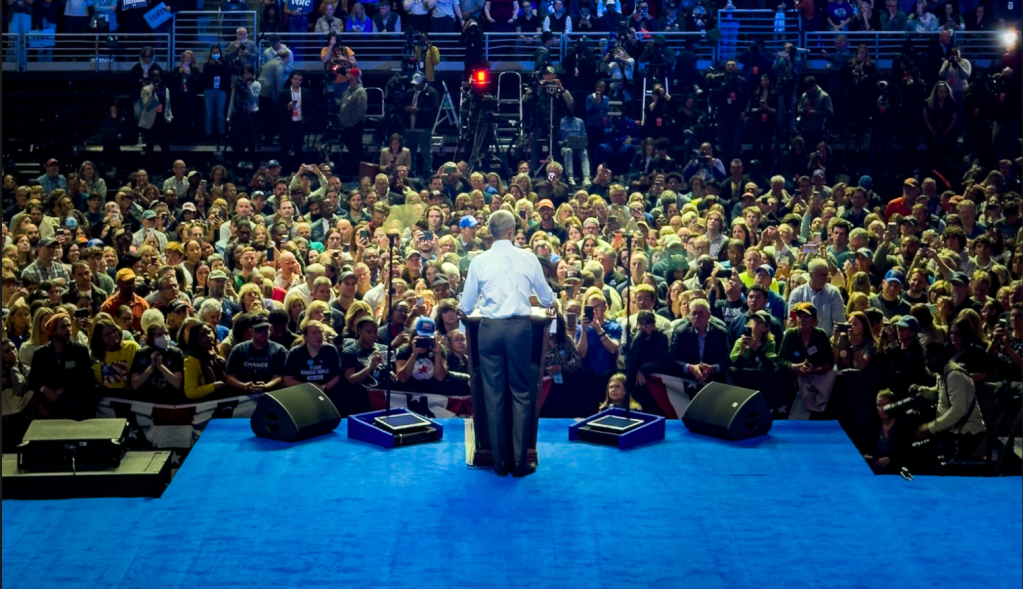
Over the winter break (we still call it that, right?), I got a text from a good friend. It consisted of the following: A link to the transcript of NYC Mayor Zohran Mamdani’s inaugural address and the message “Mamdani’s speech is GOOD!”
And it was.
Like me, my friend gets excited about good speechwriting. She’s the kind of person who notices not just what was said, but how it was said, why it worked, and all of the other intricacies that are invisible to the untrained eye.
“Equally as good as his nomination speech,” I replied.
At which point she forwarded a profile written by Andrew Lawrence in The Guardian of the speechwriter behind them: Julian Gerson.
As we were texting back and forth, one line from the article jumped out at me:
“Push yourself to think of speechwriting as more than just the written word.”
That sentence gets at something many communicators understand intuitively but don’t always articulate clearly — especially inside organizations that are increasingly oriented around systems, metrics, and optimization.
At its highest level, speechwriting isn’t just writing. It’s writing with performance in mind. It’s anticipating how words sound when spoken, not just how they read on a page. It’s understanding rhythm, pacing, emphasis, and silence. It’s knowing how ideas land when they leave the page and enter a room full of people with their own histories, assumptions, and distractions.
That’s where the real work is.
Julian Gerson’s contribution to Mamdani’s victory address deserves real, serious kudos. Among the elite pantheon of professional speechwriters throughout history, his work is already widely respected, not because it aims for flourish or cleverness, but because it shows discipline. The speech weaves political principle, history, lived experience, and strategic barbs deftly. It was built — not just written, but constructed — to be felt, not merely heard.
Across politics, business, and institutions more broadly, we’ve spent years treating influence as a technical problem. If we gather enough data, optimize the right channels, and scale distribution, we assume persuasion will follow. Language, in that model, becomes a surface layer, something to refine once the real work is done.
But the gap between communication and persuasion keeps widening.
I see organizations that communicate constantly and still struggle to align people around a shared direction. Leaders explain decisions clearly and are surprised when clarity doesn’t translate into commitment. Initiatives launch cleanly, with all the right mechanics in place, and then stall for reasons that no dashboard seems able to diagnose.
This isn’t an argument against data or technology. We need both. Data helps us understand conditions. Technology helps us move information efficiently. But neither creates meaning. Meaning still has to be constructed by someone who understands how ideas fit together and how language lands when it’s heard by real people. Data creates facts. Meaning creates movements.
That capacity — synthesis, interpretation, judgment expressed through words — is exactly what we’ve been training out of institutions.
Writing, rhetoric, and performance have been quietly downgraded to “soft skills” (a term I despise with the heat of a thousand suns), while technical fluency is treated as the primary marker of competence. The result is a mismatch between what organizations optimize for and what they actually need to move people.
The cost of that mismatch shows up in subtle but expensive ways: misalignment, disengagement, repeated explanations that don’t stick, and initiatives that consume time and resources without generating compounded momentum.
The reason the Mamdani victory speech resonated with so many professionals is not because it was novel, but because it met a standard of craft that has become surprisingly rare. People who work with language recognized what was happening because they know how difficult it is to do well.
This isn’t nostalgia for the liberal arts, and it isn’t an argument about prestige or tradition. It’s a practical assessment of capability. Reading, writing, argumentation, and interpretation are not indulgences. They are foundational tools for leadership, persuasion, and trust.
As automation increases and execution becomes cheaper, judgment becomes more valuable. Judgment is exercised through language — through deciding what matters, how ideas connect, and how to express that connection in a way others recognize as credible and worth acting on.
Technology and data remain indispensable. They describe conditions and expand reach. They don’t do the work of emotion. That work still falls to people who can think clearly and communicate with intention.
Feature image: Mike Maney
 Mike Maney
Leave a comment