Category: PR

  • The Skills We Keep Undervaluing

    The Skills We Keep Undervaluing

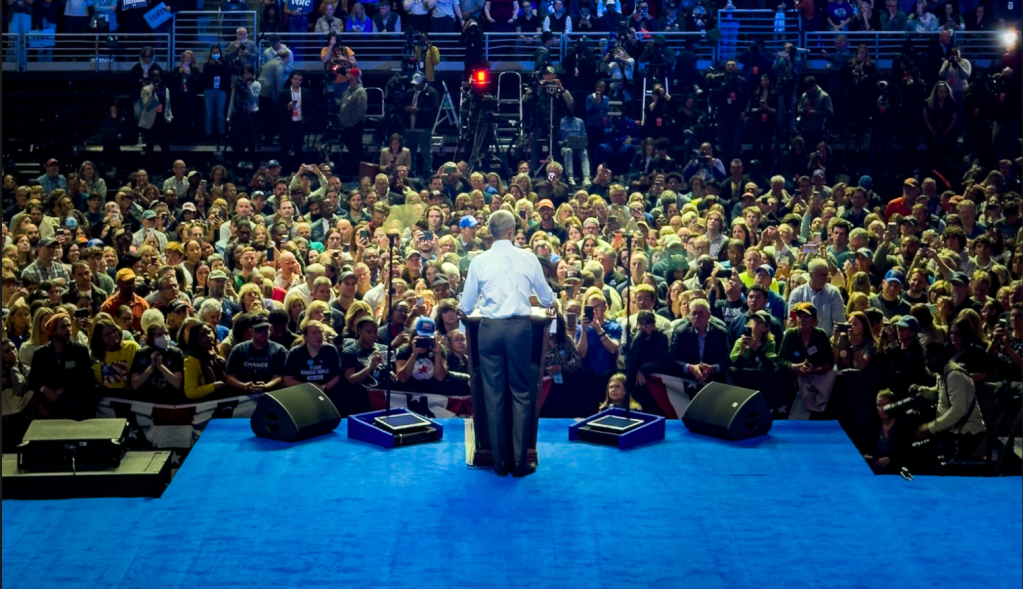
    Over the winter break (we still call it that, right?), I got a text from a good friend. It consisted of the following: A link to the transcript of NYC Mayor Zohran Mamdani’s inaugural address and the message “Mamdani’s speech is GOOD!”

    And it was.

    Like me, my friend gets excited about good speechwriting. She’s the kind of person who notices not just what was said, but how it was said, why it worked, and all of the other intricacies that are invisible to the untrained eye.

    “Equally as good as his nomination speech,” I replied.

    At which point she forwarded a profile written by Andrew Lawrence in The Guardian of the speechwriter behind them: Julian Gerson.

    As we were texting back and forth, one line from the article jumped out at me:

    “Push yourself to think of speechwriting as more than just the written word.”

    That sentence gets at something many communicators understand intuitively but don’t always articulate clearly — especially inside organizations that are increasingly oriented around systems, metrics, and optimization.

    At its highest level, speechwriting isn’t just writing. It’s writing with performance in mind. It’s anticipating how words sound when spoken, not just how they read on a page. It’s understanding rhythm, pacing, emphasis, and silence. It’s knowing how ideas land when they leave the page and enter a room full of people with their own histories, assumptions, and distractions.

    That’s where the real work is.

    Julian Gerson’s contribution to Mamdani’s victory address deserves real, serious kudos. Among the elite pantheon of professional speechwriters throughout history, his work is already widely respected, not because it aims for flourish or cleverness, but because it shows discipline. The speech weaves political principle, history, lived experience, and strategic barbs deftly. It was built — not just written, but constructed — to be felt, not merely heard.

    Across politics, business, and institutions more broadly, we’ve spent years treating influence as a technical problem. If we gather enough data, optimize the right channels, and scale distribution, we assume persuasion will follow. Language, in that model, becomes a surface layer, something to refine once the real work is done.

    But the gap between communication and persuasion keeps widening.

    I see organizations that communicate constantly and still struggle to align people around a shared direction. Leaders explain decisions clearly and are surprised when clarity doesn’t translate into commitment. Initiatives launch cleanly, with all the right mechanics in place, and then stall for reasons that no dashboard seems able to diagnose.

    This isn’t an argument against data or technology. We need both. Data helps us understand conditions. Technology helps us move information efficiently. But neither creates meaning. Meaning still has to be constructed by someone who understands how ideas fit together and how language lands when it’s heard by real people. Data creates facts. Meaning creates movements.

    That capacity — synthesis, interpretation, judgment expressed through words — is exactly what we’ve been training out of institutions.

    Writing, rhetoric, and performance have been quietly downgraded to “soft skills” (a term I despise with the heat of a thousand suns), while technical fluency is treated as the primary marker of competence. The result is a mismatch between what organizations optimize for and what they actually need to move people.

    The cost of that mismatch shows up in subtle but expensive ways: misalignment, disengagement, repeated explanations that don’t stick, and initiatives that consume time and resources without generating compounded momentum.

    The reason the Mamdani victory speech resonated with so many professionals is not because it was novel, but because it met a standard of craft that has become surprisingly rare. People who work with language recognized what was happening because they know how difficult it is to do well.

    This isn’t nostalgia for the liberal arts, and it isn’t an argument about prestige or tradition. It’s a practical assessment of capability. Reading, writing, argumentation, and interpretation are not indulgences. They are foundational tools for leadership, persuasion, and trust.

    As automation increases and execution becomes cheaper, judgment becomes more valuable. Judgment is exercised through language — through deciding what matters, how ideas connect, and how to express that connection in a way others recognize as credible and worth acting on.

    Technology and data remain indispensable. They describe conditions and expand reach. They don’t do the work of emotion. That work still falls to people who can think clearly and communicate with intention.

    Feature image: Mike Maney

  • What Separates Elite Communicators From Everyone Else

    What Separates Elite Communicators From Everyone Else

    Over the past thirty-odd years, I’ve worked alongside some of the world’s top communications professionals in just about every setting imaginable — from big, Mad Men–style agencies to small, tech-focused boutiques to some of the world’s largest and most iconic companies. The clients change. The people change. But the qualities that define great communicators don’t. What stands out among the best of the best is a shared DNA in how they operate. 

    I’m not talking about people who are good on stage. I’m talking about people who shape how institutions are understood.

    The brains and guts of the strongest comms pros are different than most people in their organizations. They live inside the company but see it from the outside: through the eyes of journalists, analysts, competitors, customers, regulators, and critics. 

    The qualities they possess are observable. And once you’ve seen them at work, they’re hard to unsee.

    Perception: How They See

    1. They see trends and signals earlier than others

    They have really strong pattern recognition. They notice weak signals before they harden into headlines. While others are reacting to what’s already obvious, elite communicators are tracking the edges — the anomalies, the shifts in tone, the unexpected adjacencies. They see the trend before the trend report.

    2. They have an innate sense of signal versus noise

    They know what will trend versus what will be a blip. They can distinguish between genuine inflection points and temporary turbulence. They weight information instinctively, understanding context, source credibility, and momentum. In an age of infinite information, this filtering capacity is worth its weight in gold. 

    3. They are news junkies

    It’s a compulsion. They read, watch, and listen to everything they can. Fiction, non-fiction, news, gossip…doesn’t matter. They can’t turn it off. They cannot help but consume, connect, and contextualize.

    4. They are deeply engaged with their organization’s community

    They know influence requires proximity. They spend time with the people they speak for and about, learning the context, the language, the tensions, and the unwritten rules. They connect people who should know each other and ideas that are complementary. 

    Synthesis: How They Think

    5. They make connections others struggle to find

    They are pathologically curious. They connect dinner conversation to market dynamics to historical precedent without trying. Their minds naturally cross-reference: a customer complaint reminds them of a competitive pattern, which recalls a regulatory shift, which suggests a narrative opportunity. Their knowledge base is unusually broad and weirdly interconnected.

    6. They think three steps after the action

    They don’t think in actions; they think in chains of consequence. If this story lands, what will it enable others to say next? They map the second-order and third-order effects while everyone else is still celebrating the first-order win. They see how today’s press release constrains next quarter’s positioning. They understand that every announcement is also an invitation — to competitors, to critics, to copycats — and they anticipate the response before sending the invitation.

    7. They operate effectively in ambiguity

    They’re comfortable in the fog. They counsel on limited information and instinct because complete data rarely exists.

    8. They see their organizations from the outside-in

    They are like human LIDAR, constantly scanning and absorbing signals. They look at the company as the outside world would, not employees. They can hold both “we believe in this company” and “here’s how a skeptical journalist will frame this” in their minds simultaneously. They are the organization’s common sense. 

    Narrative: How They Shape Meaning

    9. They write masterfully

    They know clear writing reflects clear thinking and clear strategy. They believe every word matters. They abhor corporate jargon and buzzwords. They can craft a compelling story in 160 characters or 5,000 words with equal skill.

    10. They are master storytellers

    They communicate in stories, not messages. They believe every organization has a Hollywood blockbuster waiting to get out. They understand story arcs, protagonists, villains. They read and watch and listen voraciously, constantly studying how great narratives actually work.

    Judgment & Restraint: How They Protect the Enterprise

    11. They are pessimistic optimists

    They are inherently paranoid while looking for the silver lining. They game out how things could go wrong. The joke that doesn’t land. The claim that gets challenged. The announcement that triggers the opposite reaction. That defensive imagination is what makes their optimism trustworthy.

    12. They remain calm under pressure

    They are the human behind “company spokesperson said.” When everything around them is hair-on-fire, they slow the room. They separate stress response from decision-making with eerie consistency. They know what matters, what can wait, and what absolutely must or cannot be said.

  • The Future Belongs to Clear Thinkers, Not Fast Writers

    The Future Belongs to Clear Thinkers, Not Fast Writers

    I’ve long argued that clear writing is the surest sign of clear thinking. Putting words to paper or screen forces choices, imposes structure, and strips away clutter. Writing creates clarity.

    AI hasn’t changed that. It has simply added the illusion that anyone can be the next Stephen King. But there’s only one Stephen King. Two, if you count Richard Bachman. Okay, three if you count that Joe Hill fella. But the idea that a prompt can turn anyone into a seasoned writer is a load of crap.

    When AI-assisted writing works, it works because the thinking behind it was clear in the first place (something Oxide’s Bryan Cantrill echoes in this public RFD). Someone came to the tool with context, intent, and a point of view. The AI helped with execution. The hard brainwork was already in motion.

    When the thinking isn’t there, AI fails fast. It spits out surface-level sludge that puts pretty nouns and verbs neatly together. It falls apart the second you break the surface. The author didn’t outsource writing; they outsourced thinking. And that’s, how shall I say it…bad.

    Clear writing still reveals clear thinking. AI doesn’t change that; it just makes it obvious who’s actually thinking before they hit the prompt.

    The Domain of Experience

    AI has become the domain of the “olds”.

    Veterans who know what good thinking looks like, who bring years of pattern recognition and judgment, and can use AI to sharpen their output. They have the experience to spot logical gaps, recognize weak arguments, and know when something sounds good to their ears but feels wrong in their gut.

    Getting great content out of AIs is difficult. It takes a lot of work and rework. Just imagine walking up to a smart person on the street and saying “make me an adventure” and expecting it to be anywhere near good. In the hands of experts, though, I think you could get great content. And, you could probably get more content.Cote, The AI Apprentice’s Adventures

    Newer writers often stop at the first prompt because the output looks clean and convincing. The problem is that polish isn’t the same as insight or depth. Without the judgment that comes from wrestling with ideas and words over time, it’s harder to see when the model is basically just winging it.

    This reality is the defining rule of the AI age. Computing has always relied on its shorthand maxims, starting with the 1960s classic: Garbage in, garbage out. AI has simply added its own corollary: Wisdom in, resonance out.

    AI doesn’t invent wisdom; it mirrors the quality of the mind engaging with it. Thin prompts yield thin answers. But when you bring experience, nuance, and constraint to the table, the system reflects that back with greater fidelity. In the end, the limiting factor isn’t the model. It’s the judgment of the person using it.

    AI as Sparring Partner

    The real promise of AI is not as a replacement for thinking, but as its most rigorous catalyst yet. Used well, it forces you to test your thinking instead of skating past it. You have to question what it gives you, push on the weak spots, and decide what actually earns the right to stay on the page (or screen, as it may be). The tool widens your aperature, but the judgment is still yours.

    Use it as a sparring partner and the ideas get sharper. Most people don’t push that far, and that’s where the trouble starts. Those who do and get the most out of AI aren’t offloading the thinking. They’re pushing it further. The risk is the urge to take the shortcut.

    Garbage thinking still produces garbage writing. AI just hides it better.

  • A Small Use of AI That Makes a Big Difference

    On opening night of Monktoberfest, I caught a quick photo of the four authors of the new Progressive Delivery book on a boat in Casco Bay – Heidi Waterhouse, Kim Harrison, Adam Zimman, and James Governor. I added it to a thread Heidi posted to Bluesky about the book launch.

    I would have written alt text for that photo. I’m in the habit for the most part and do my best to think about others. But for a quick reply post? The mental overhead often adds more friction than the value of the reply, slowing me down enough that I will sometimes consider skipping it. With AI, it took seconds.

    When I post photos to Bluesky, I use a custom prompt/GPT to write the alt text. It describes what’s in the image, how it feels, and what someone who can’t see it might want to know. It’s a really basic prompt and I’m sure there are a bunch more like it out there. Here it is for reference:

    Create alt text for images posted to this chat. Review the image and provide descriptive text that helps a user with no or limited sight understand and experience the visual image. The description must fit in 2,000 characters.

    This sounds trivial until you realize how rarely it happens. Most images posted online have no alt text at all. Not because people don’t care about accessibility, but because describing an image takes mental energy that’s already been spent capturing and posting it. The moment has passed.

    For me, AI removes that friction. I upload an image, the system drafts a description, I tweak it if necessary. It’s a quick trip from finder to AI to post. Suddenly accessibility becomes the default.

    When I was more active than I am today on Mastodon’s Hachyderm instance, this was built right into the image upload. One click. The AI-assisted descriptions made that norm easy to follow.

    Now personal prompts and custom GPTs make this available anywhere. Don’t get me wrong: AI can’t replace the human eye and brain. It sometimes misses nuance, gets details wrong, can’t read tone the way you intended (or numbers and letters; but I digress). But it gives you a starting point.

    Here’s what changes: when you add alt text consistently, you start noticing when others don’t. You see how many images float through your feed inaccessible to screen readers, meaningless to anyone who can’t see them. You realize how much gets shared with the assumption that everyone experiences it the same way.

    This is what good technology does. It removes the small obstacles that keep good intentions from becoming consistent practice.

    That’s worth automating.