I have an embarrassingly large television screen hanging on my living room wall. 85” of LED goodness. Almost went for the 100” version, but the Costco deals were only so good. Tacked some Govee LEDs to the back that magically reflect colors from the scenes on the screen to the wall and really give it that movie-theater effect. It’s orders of magnitude better than the best theater I went to growing up (which, if you grew up in small-town northwestern New Jersey, you know was The Strand).
The Strand is, sadly, no more. And even that oversized home setup can’t match the experience I had watching the Jaws / Saturday Night Fever double feature in that $1-a-ticket, red velvet-on-the-walls theater.
There’s something special about seeing a flick in a theater, as this Guardian story points out (thanks to James for the link). The experience of watching a film on the big — bigger — screen, the smell of popcorn, the trailers, the collective energy of the audience…it’s something that simply cannot be replicated at home. It’s a communal experience that allows us to escape reality for a couple of hours, drawing us into different worlds and stories that linger long after the credits roll.
My wife and I have a monthly subscription to Regal’s all-you-can-watch movie pass. Earlier this week, while she hosted friends writing postcards to get out the vote, I slipped out to catch a late showing of Stephen King’s The Long Walk.
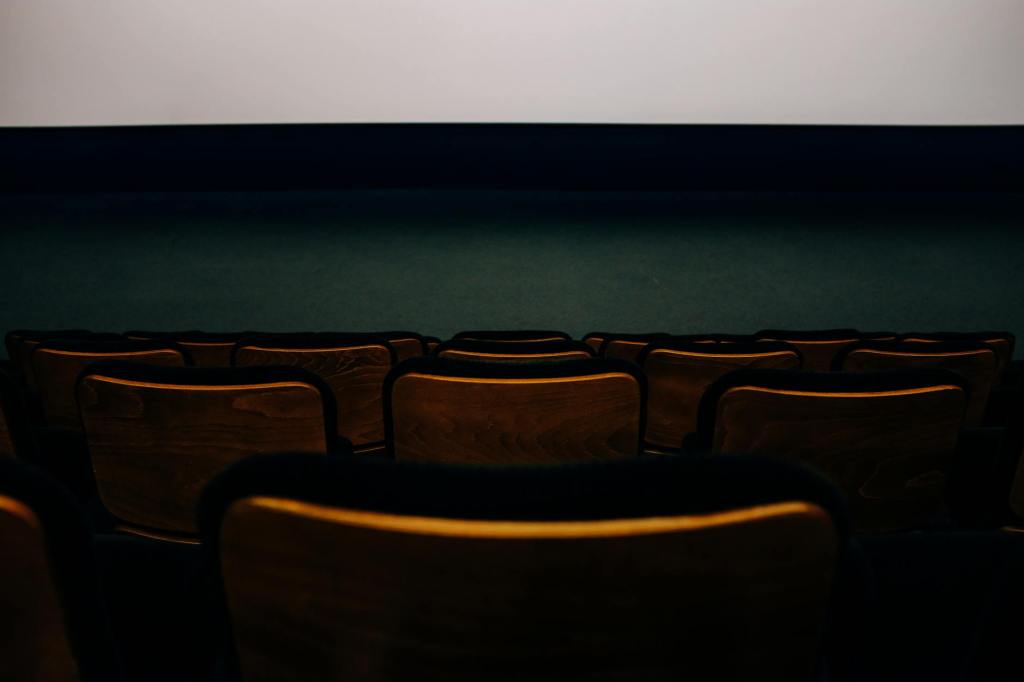
I got there a little early. The theater was empty. I grabbed a seat smack dab in the middle. As the pre-rolls started, I expected others to wander in. Then the trailers rolled and…nobody. I had the theater to myself — just me, a tub of popcorn, and a King classic on the screen. It was like my living room, except it wasn’t. It still felt different from sitting on a couch, even if the seat reclined far enough to nearly put me flat.
Somewhere between the last trailer and the first line of dialogue, I realized how rare it is to give one thing your full attention anymore. No phone. No second screen. Just story. That kind of presence is what makes movie theaters special. And it’s the same muscle that good storytelling in any form depends on.
My career has been built on storytelling. Immersing myself in stories — in books, on screens, in lyrics — has taught me how to tell better ones. You start to see how structure works, how characters build over time, how rhythm and silence carry meaning. You hear real dialogue and learn how much can be said without saying anything at all. That’s the craft.
My neighborhood poker buddies once asked how I seemed to know so much about so many random things. I told them it’s my job to make connections. You never know when something Taylor Swift does will tie back to a new computing operating system. Maybe it won’t. Maybe it will. Either way, that’s how the dots get made. And I also reminded them not to ask me the second, deeper questions about any of those topics.
It’s why I implore PR rookies, and even my peers, to ignore the business books. Fill their nightstands and Kindles with works of fiction. Go to the trashy late-night movie. Spend the rainy Sunday morning watching a black-and-white Turner Classic. Because getting good at this work isn’t about mastering the message, it’s about learning to see, listen, and connect.
I could’ve waited to see The Long Walk when it hit one of the streaming services. It would’ve been fine. But the magic of the theater is that it puts you somewhere else — a different place, a different mindset. The same goes for the stories we tell in our day jobs. Not to remind people they’re working, but to give them a story they can actually feel — something that lets them experience what we’re trying to communicate.
 Mike Maney