Category: AI & Technology

  • Thanks, Dad: Vint Cerf, Father of the Internet, Retires

    Thanks, Dad: Vint Cerf, Father of the Internet, Retires

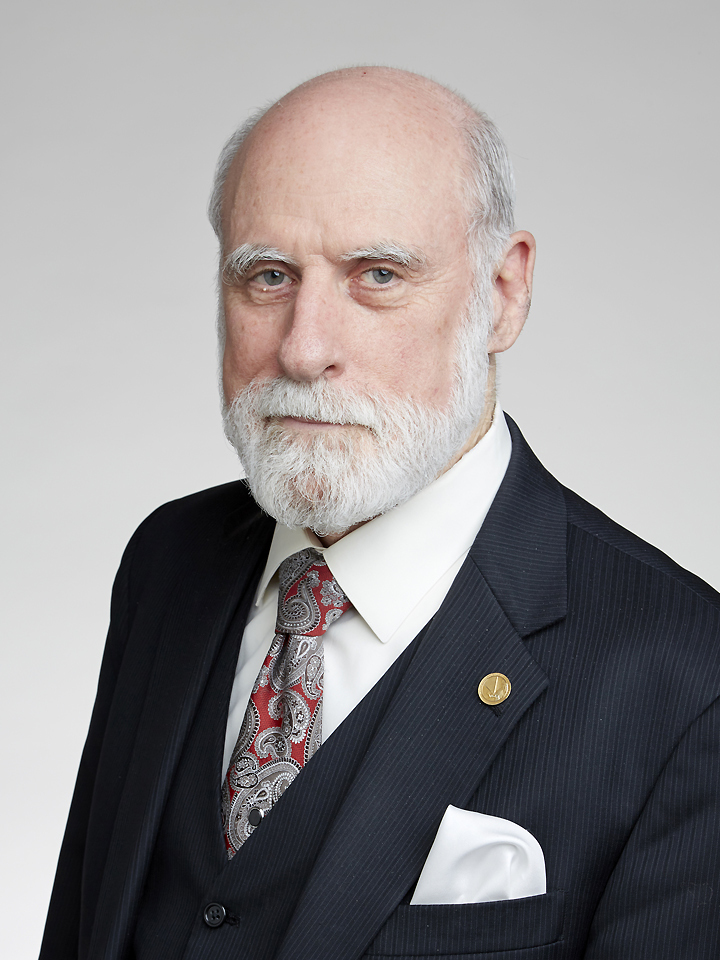
    Last week, TechCrunch reported that Vint Cerf, the person many widely recognized as the “father of the internet”, is retiring.

    Most of us navigate the digital world every day without giving a thought to its architecture. Cerf, alongside Bob Kahn, co-designed TCP/IP — the fundamental plumbing that allows disparate computer networks to talk to one another. Computing’s highest honor, the Turing Award, sits on his shelf. So does the Presidential Medal of Freedom. Nearly everything we do online rests on protocols he helped pioneer in the 1970s. For the past twenty years, he has carried that legacy forward under a fitting title: Google’s chief internet evangelist.

    Reading the news took me down memory lane. Over the course of my career, I’ve had the rare privilege of helping amplify Vint’s insight at two very different moments in the internet’s evolution.

    The first was exactly 26 years ago this month, in June 2000, I placed an op-ed co-authored by Vint and IBM’s internet guru, John Patrick, in The Financial Times.

    Fast-forward 21 years to June 2021. This time, I interviewed Vint alongside Linode founder Christopher Aker for a piece in The New Stack about the past and future of cloud infrastructure. When I asked them what they would do differently if they could start all over again, both gave the exact same answer without a second of hesitation: they would build IPv6 first, instead of IPv4.

    As Vint enters a well-earned retirement, his impact leaves a permanent mark on human history. I’ll always be grateful to have played even a nanosecond’s part in helping share that story.

    Congratulations on the retirement, Vint. The internet — and everyone who’s had the chance to learn from you — is better off for the work.

    (Feature image by Duncan.Hull – Own work, CC BY-SA 4.0, https://commons.wikimedia.org/w/index.php?curid=87566012)

  • Cloud computing’s next act

    Whether in reaction to economic conditions, or taking advantage of the leveling off of the core services that used to differentiate cloud providers, companies are beginning to take a closer look at their cloud sprawl and spend. Some are resetting strategies by taking things back in house; some are going in the opposite direction and spreading workloads across multiple providers to find the best fit for their business; and some are using this inflection point to reconsider whether they want to continue building on a legacy centralized architecture or prepare for a more decentralized and distributed future.

    So while things like egress costs and price performance appear to be about saving money, what they’re really about — to me — is something more profound: the beginning of a new phase for cloud computing that shifts control back to the customer.

    “Linode has phenomenally-generous bandwidth that, all told, has shown us savings of around 60% over AWS even without considering the savings on hardware,” said Jonathan. “It’s easy to get new servers whenever we want, the Linode API is extremely reliable, and pricing is never a surprise. We also use Linode Managed Databases, and we’ve found that Linode’s CPU performance per dollar blows everyone else out of the water.” 

    Jonathan Oliver, CEO, Smarty
  • Talking cloud with TFiR

    I had an opportunity recently to chat with TFiR host Swapnil Bhartiya about the current state of the hyperscale cloud computing market.

  • The GPT moat

    Back in 2016, I wrote a post about people naturally wanting to work for the good of humanity. I included a pullquote highlighting OpenAI’s non-profit mission.

    OpenAI is a non-profit artificial intelligence research company. Our goal is to advance digital intelligence in the way that is most likely to benefit humanity as a whole, unconstrained by a need to generate financial return.

    Fast-forward to December 2022 and the meteoric buzz and building around ChatGPT. And I am reminded of this four year old Monktoberfest talk by Bryan Cantrill on the too frequent gulf between an organization’s stated principles and their actions.

  • Cloud Foundry Summit

    Most photographers come at photography from the starting point of the camera. My career was built on helping organizations tell better stories. Creating opportunities to combine my profession of public relations with my passion of photography is pretty awesome.

    All set up to create a few hundred individual stories of the speakers and VIPs here in Boston for Cloud Foundry Summit.

  • The Bard of Shoreditch: 2017 Tech Predictions

    The inimitable James Governor — aka @monkchips, aka founder of the very developer community oriented Redmonk nuevo analyst firm, Redmonk — unleashed his top 12 predictions for the upcoming dumpster fire of a year. As always, the kid from Shoreditch brings the quirky heat.


    A couple of James’ predictions struck home with me.

    Right off the bat, he predicts increased attention yet again on APIs, something companies have been slowly waking up to over the past five years thanks in large part to advocacy by folks like Redmonk, Kin Lane, Laura Merling, Lorinda Brandon, Sam RamjiEric Norlin and Stephen Willmott.

    We’re not building things to be used in the context that we decide…we’re building things to be used in the context that the user decides.

    Coming into the fourth spot on James’ list is a prediction that we’ll see big vendors going on a bit of an acquisition/acquihire spree in 2017 as a way to clean up a messy and confusing market. What this means for startups is twofold: (1) The noise and confusion in the market means the competition for attention is at Jan Brady like middle child levels; and (2) Creating and telling a clean, compelling story is more critical than ever. Talk to me if your startup is struggling with this.

    At number five, James hits on something I think is going to be even bigger and more challenging than many companies expect. He calls it conversational commerce. It’s the expectation that humans expect a human tone to their interaction with technology. This is another area where developers, designers and marketers will struggle over the next year, as they will be forced to abandon their years of metrics and buzzword-laden language to build emotion and understanding into their customer facing technology and interaction.

    And, lastly, prediction number 8 from the Redmonk office in London: the rise of pervasive speech recognition. This one’s special for me. I led global communications for IBM’s emerging pervasive computing division back when the future was now. One of the technologies under our umbrellas was speech. Many folks knew it as ViaVoice in a consumer box, though it was embedded in a number of early devices we take for granted today. I had the opportunity to work with the Ozzie Osborne (no, not that one; though I did score a “Ozzie Osborne at IBM? No !@#$ Way, Man!” headline once), and the queen of speech technology PR, Geri Kan.

    Huge thanks to James for taking me down memory lane.

  • The Most Important API Call

    I head out to Broomfield, Colorado, early tomorrow morning for my annual pilgrimage to Gluecon. It’s a conference I look forward to every year, as much for seeing friends I’ve made in the tech industry as for the great content. This year’s conference now has even deeper meaning.

    One of the friends I most look forward to seeing is Kin Lane. He’s one of the smartest humans on the building blocks of today’s modern technology infrastructure. He did time in the White House. Yes, that White House. But, beyond being wickedly smart, he’s unbelievably caring. Like the Grizzly Adams of APIs. His API Evangelist website is, arguably, the single most important website on this topic (a topic of which, without it, there would be no apps on your phone or Uber at your curb or Watson playing Jeopardy).

    And, today, it’s for sale. For, perhaps, the most important reason of all: family.

    Bidding for API Evangelist starts at $10,000. You have until Friday to put your bids in. If you are a company that has built a business on APIs, this is your opportunity to support one of the people behind the reason for your company’s existence. If you are in marketing or communications, this is the chance to counsel your executives on doing what is right. A drop in your marketing bucket means the life of an extended member of your community.

    Kin has put his life on hold to help a member of his family who needs his full attention. It’s not a decision anyone would take lightly, yet, I suspect it was an easy decision for Kin because of the kind of human he is.

    UPDATE: Mehdi Medjaoui set up a Generosity page to make it easy for people to contribute.

    (Image: Creative Commons via Alan Levine).

  • Talking tech with Tom

    Redmonk analyst and Monktoberfest partner in crime Tom Raftery recently invited me to be a guest on his weekly “Technology for Good” show. You can catch us talking about wide range of tech issues in the video below.

  • The Billion Dollar Barometer

    How much IT spending is happening in the cloud? A lot. And a big slice of it is being managed by Cloudability (client). How big of a slice? $1 billion (cue Dr. Evil laugh). ReadWrite’s Matt Asay breaks the story and finds parallels between the cloud and how open source software exploded across the enterprise.

  • 4 reasons why Flappy Bird was a hit

    If you haven’t been stuck under a rock for the past week, you know that the world has gone crazy for an app called Flappy Bird (which the developer suddenly pulled off the market for being too addictive). Heck, I was even quoted in USA Today on it.

    It’s rare that an app has the rocket-fueled, meteoric trajectory that Flappy Bird had. Which is why I think it’s important to look at the five reasons it was so successful:

    1. It required logging in with your Facebook account to give you a more social experience.
    2. It awarded prizes in Bitcoins for each level you passed.
    3. It encouraged continued play to unlock special in-app purchases.
    4. It focused on slick graphics instead of the game play.

    Sarcasm intended.