Category: Uncategorized

  • The Inch Leonardo Never Had

    The Inch Leonardo Never Had

    Not every idea deserves to live. But plenty of good ones die before they get a chance. They vanish under the weight of calendars, inboxes, and interruptions — the thousand small frictions that erase a thought before it has time to become something real.

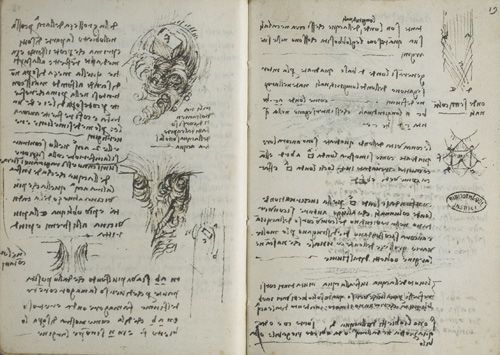
    Leonardo da Vinci lived this problem as fully as anyone we remember. His notebooks are filled with flashes of brilliance that never moved an inch toward becoming real. They reveal a mind where ideas arrived faster than execution, and a compulsion to record them, even when they might never be completed. They stayed ink on paper. Imagine if he’d had something to carry those sparks just a little further.

    Today, we do.

    AI gives us the inch Leonardo never had: not just a way to keep an idea alive, but a way to work it before it’s fully formed. A sentence can be pushed, expanded, challenged. A paragraph can be reshaped or broken apart. A rough draft becomes something you can interrogate. All of it quickly enough to learn whether there’s anything there worth shaping at all.

    But that inch isn’t enough.

    Ideas still need something only humans provide: judgment.

    I learned this early in my career working with Mike Zisman and Larry Prusak on IBM’s knowledge management business (well, they worked on it; I helped them communicate it). Much of that work, as I remember it, centered on the difference and interplay between explicit and implicit knowledge. What you can write down versus what you simply know. Facts versus instinct.

    AI is extraordinary at the explicit. It can generate variations, surface patterns, and produce options at scale. But it can’t do the tacit work. It can’t feel the off-note in a promising idea or sense when something ordinary is pointing to something deeper. It can generate possibilities, but it can’t tell the signal from the static or decide which ones matter.

    AI raises the premium on expertise. When ideas become cheap and abundant, discernment becomes scarce. The advantage shifts to people who can interpret what AI produces with context. They implicitly know when to push an idea further, when to reshape it, and when to let it go.

    That shift changes what expertise actually looks like. It’s no longer defined by how many ideas you can generate, but by how well you can tell which ones hold up under pressure. When beginnings are cheap, judgment is knowing which ones are worth the effort.

    This is the consequence of getting the inch Leonardo never had. AI widens the funnel of possibility, but it doesn’t make sense of what flows through it. It accelerates ideas without considering what happens when they meet reality.

    That responsibility now belongs to us.

    AI can extend a thought, multiply it, and push it forward faster than ever before. But it can’t decide what matters. That decision is what turns an inch into something real.

  • The Magic of the Room

    The Magic of the Room

    I have an embarrassingly large television screen hanging on my living room wall. 85” of LED goodness. Almost went for the 100” version, but the Costco deals were only so good. Tacked some Govee LEDs to the back that magically reflect colors from the scenes on the screen to the wall and really give it that movie-theater effect. It’s orders of magnitude better than the best theater I went to growing up (which, if you grew up in small-town northwestern New Jersey, you know was The Strand).

    The Strand is, sadly, no more. And even that oversized home setup can’t match the experience I had watching the Jaws / Saturday Night Fever double feature in that $1-a-ticket, red velvet-on-the-walls theater.

    There’s something special about seeing a flick in a theater, as this Guardian story points out (thanks to James for the link). The experience of watching a film on the big — bigger — screen, the smell of popcorn, the trailers, the collective energy of the audience…it’s something that simply cannot be replicated at home. It’s a communal experience that allows us to escape reality for a couple of hours, drawing us into different worlds and stories that linger long after the credits roll.

    My wife and I have a monthly subscription to Regal’s all-you-can-watch movie pass. Earlier this week, while she hosted friends writing postcards to get out the vote, I slipped out to catch a late showing of Stephen King’s The Long Walk.

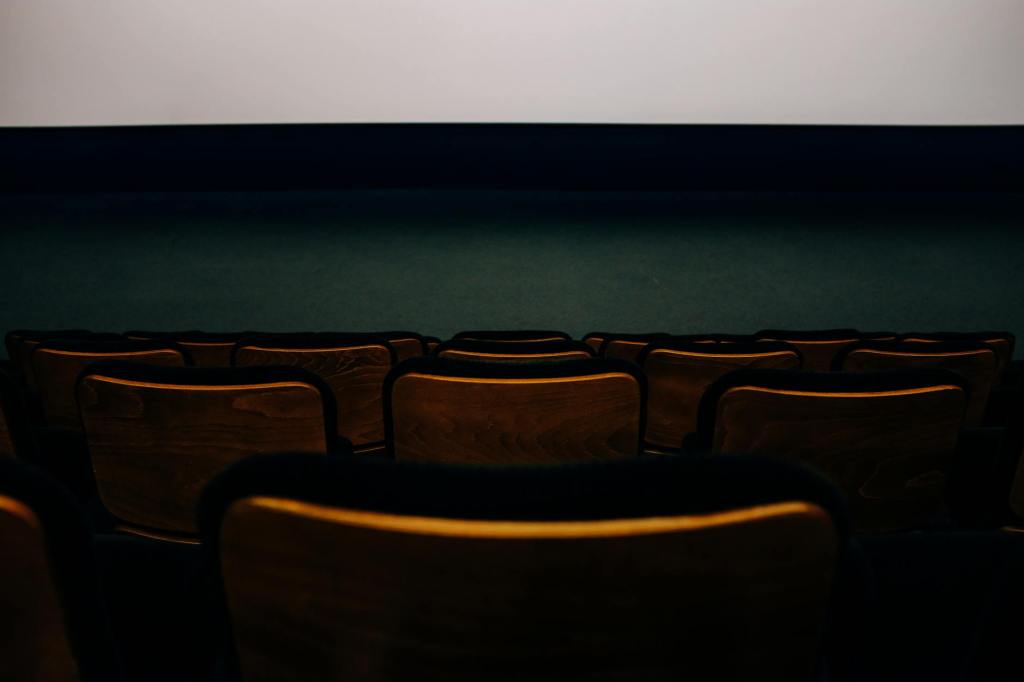
    I got there a little early. The theater was empty. I grabbed a seat smack dab in the middle. As the pre-rolls started, I expected others to wander in. Then the trailers rolled and…nobody. I had the theater to myself — just me, a tub of popcorn, and a King classic on the screen. It was like my living room, except it wasn’t. It still felt different from sitting on a couch, even if the seat reclined far enough to nearly put me flat.

    Somewhere between the last trailer and the first line of dialogue, I realized how rare it is to give one thing your full attention anymore. No phone. No second screen. Just story. That kind of presence is what makes movie theaters special. And it’s the same muscle that good storytelling in any form depends on.

    My career has been built on storytelling. Immersing myself in stories — in books, on screens, in lyrics — has taught me how to tell better ones. You start to see how structure works, how characters build over time, how rhythm and silence carry meaning. You hear real dialogue and learn how much can be said without saying anything at all. That’s the craft.


    My neighborhood poker buddies once asked how I seemed to know so much about so many random things. I told them it’s my job to make connections. You never know when something Taylor Swift does will tie back to a new computing operating system. Maybe it won’t. Maybe it will. Either way, that’s how the dots get made. And I also reminded them not to ask me the second, deeper questions about any of those topics.

    It’s why I implore PR rookies, and even my peers, to ignore the business books. Fill their nightstands and Kindles with works of fiction. Go to the trashy late-night movie. Spend the rainy Sunday morning watching a black-and-white Turner Classic. Because getting good at this work isn’t about mastering the message, it’s about learning to see, listen, and connect.


    I could’ve waited to see The Long Walk when it hit one of the streaming services. It would’ve been fine. But the magic of the theater is that it puts you somewhere else — a different place, a different mindset. The same goes for the stories we tell in our day jobs. Not to remind people they’re working, but to give them a story they can actually feel — something that lets them experience what we’re trying to communicate.

  • Reflecting on a Year of Photographs: My 2023 Best-Of Collection

    As the curtain falls on 2023, I find myself in the familiar territory of retrospection, sifting through images that have defined my year as a photographer. Narrowing them down to a traditional Top 10 was a struggle. A struggle in which I failed miserably. 

    This year marked a significant shift in my photographic tools. While my trusty Canon often took a backseat, the iPhone 15 Pro Max emerged as a surprising daily go-to camera. Its 120mm zoom was a revelation and the one thing that held back previous versions from taking a stronger hold in my quiver. It really changed how I shoot and what I see. Is it perfect yet? No, but the iPhone is a game changer.

    My portfolio this year reflects a diverse collection of moments and experiences. In the studio, the precise control of off-camera flash melded with the subtleties of natural light to create a number of portraits that rise to the top of my portfolio. The streets, always a canvas for unscripted stories, came alive under my lens, each scene a raw and unfiltered slice of life. Exploring low light and abstract subjects pushed my creative boundaries, while the majestic scenes provided by Mother Nature were a reminder of the ever-present beauty in our world and in my own backyard. The Bucks County Classic, true to tradition, added more favorites to my collection.

    A highlight of the year was seeing my photographs play a role in a hard-fought school board campaign that drew national attention. This experience was more than just an ego boost; it was a powerful reminder of the influence and inspirational capacity of photography.

    I’m excited for what 2024 holds. I’m ready for new creative challenges and fresh perspectives. Here’s to capturing more compelling stories in the year ahead.

  • The beautiful game (of business)

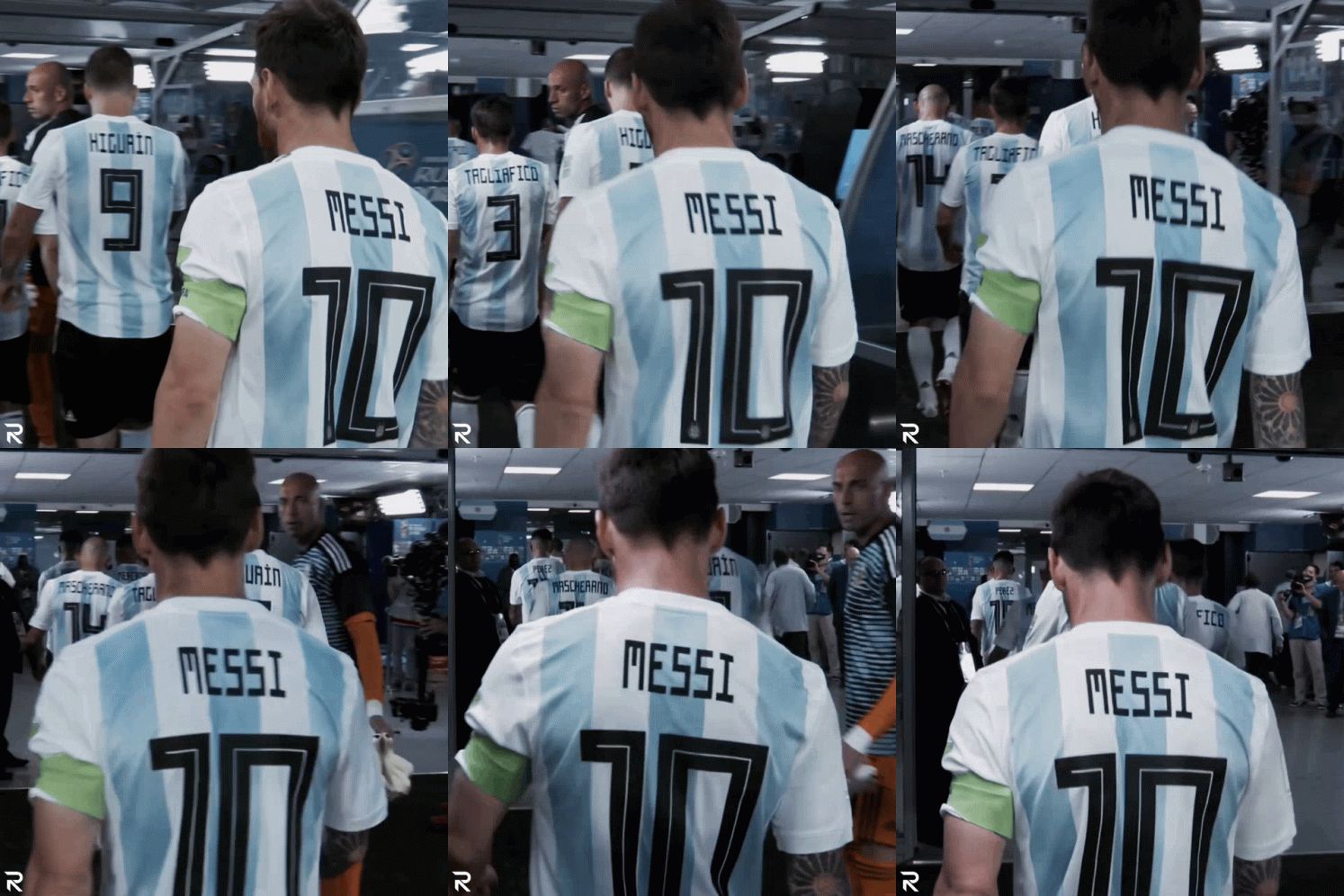
    Eleven players on the pitch. One — the inimitable Lionel Messi — plays on a higher plane than everyone else. Maybe two planes. Three even.

    Yet, even with his astro level skills, he still needs his ten teammates to win. He needs his team to set him up for goals or put the ball in the back of the net when he gives them the ball.

    It is like that in business, too. Teams need their Messi: a leader who generously shares their skill and experience to make the whole team better, whose level of play challenges and drives individual players to elevate their own game, who passes the ball as much as they take the shot themselves, and whose presence and enthusiasm excites and inspires those around them to push harder and think bigger.

    Who is your team’s Number 10?

  • Three kinds of photos

    There’s an ongoing debate in photography about whether a photographer takes or makes a photograph. I’d argue celebrity photographer Greg Williams puts it to rest with this quote:

    “Sometimes you take a picture, sometimes you create a picture and other times you really make a picture with the subject.”

    The stories behind 5 intimate celebrity photos
    By Oscar Holland, CNN

  • Like Shakespeare on a bike

    Like Shakespeare on a bike

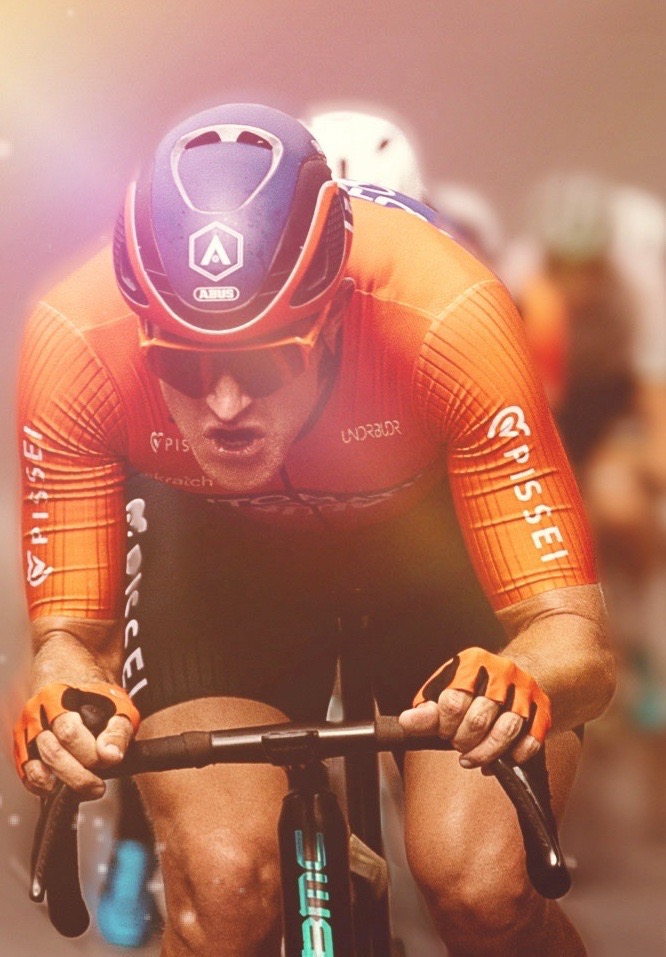
    There is beauty in bike racing. Two-time U.S. champion John Eustice captures it in his daily recaps of the Tour de France.

    The team took full control with 2.5-km to go when Ramon Sinkeldam strung out the field into a single line, snaking through sweeping turns of the approach to the finish. Once spent, Jonas Rinckaert took over, there was a bit of a lull that allowed the other teams to come up before he re-accelerated to 1-km to go opening up the Mathieu van der Poel show. VdP started sprinting, completely asphyxiating his rival lead-out men, dropping Philipsen off on the left side at 300-meters to the line. Mark Cavendish, the last winner in Bordeaux in 2010, exploded down the right side of the road at 70-kph, the fastest recorded speed of the day.  Eritrea’s Biniam Girmay, in the chance of his career, was on Cav’s wheel. Philipsen dove right, aiming for the Manx Missile’s slipstream. Girmay, and here’s the rub, was letting a gap open between himself and Cav, he was being dropped in full sprint – which was all Philipsen needed. He forced himself into the gap, Girmay was a bit off balance and bounced a bit on the side boards, but it was already over for him, the Eritrean had lost his moment. Philipsen and his team had ridden the sprint from the front. The Belgian won because he has the best team and he is the fastest sprinter. There was no fault committed: this was professional road sprinting at its best.

  • Two’s a coincidence, three’s a trend

    Two’s a coincidence, three’s a trend as the old saying goes.

    I’ve had more than a few conversations lately with folks around the technology industry that have had a common theme running through them — not just topically thematic, but in tone, too.

    And that theme and tone have me thinking we’re starting a brand new cycle of tech that feels (and looks) a lot like the start of the Internet more than the start of the Web.

    A cycle where engineers move to the forefront tackling new infrastructure, architecture, and networking challenges that future waves of developers will build on.

    A cycle that makes the acceleration we witnessed over the last decade feel like a blip on the timeline of innovation.

  • Cloud computing’s next act

    Whether in reaction to economic conditions, or taking advantage of the leveling off of the core services that used to differentiate cloud providers, companies are beginning to take a closer look at their cloud sprawl and spend. Some are resetting strategies by taking things back in house; some are going in the opposite direction and spreading workloads across multiple providers to find the best fit for their business; and some are using this inflection point to reconsider whether they want to continue building on a legacy centralized architecture or prepare for a more decentralized and distributed future.

    So while things like egress costs and price performance appear to be about saving money, what they’re really about — to me — is something more profound: the beginning of a new phase for cloud computing that shifts control back to the customer.

    “Linode has phenomenally-generous bandwidth that, all told, has shown us savings of around 60% over AWS even without considering the savings on hardware,” said Jonathan. “It’s easy to get new servers whenever we want, the Linode API is extremely reliable, and pricing is never a surprise. We also use Linode Managed Databases, and we’ve found that Linode’s CPU performance per dollar blows everyone else out of the water.” 

    Jonathan Oliver, CEO, Smarty
  • There’s literary beauty in cycling

    Write what you know, so the old adage goes. Which is exactly what two-time U.S. champion John Eustice does.

    The junction between the groups was made at the base of the famed Koppenberg climb, with 45-k to go, where Pogačar accelerated – of course, what else would one do? – and the big three, van der Poel, Van Aert and Pogačar were gone. The trio sliced through the fading riders of the early break, picking up and discarding them in turn.

    Pogačar the Conquerer — John Eustice