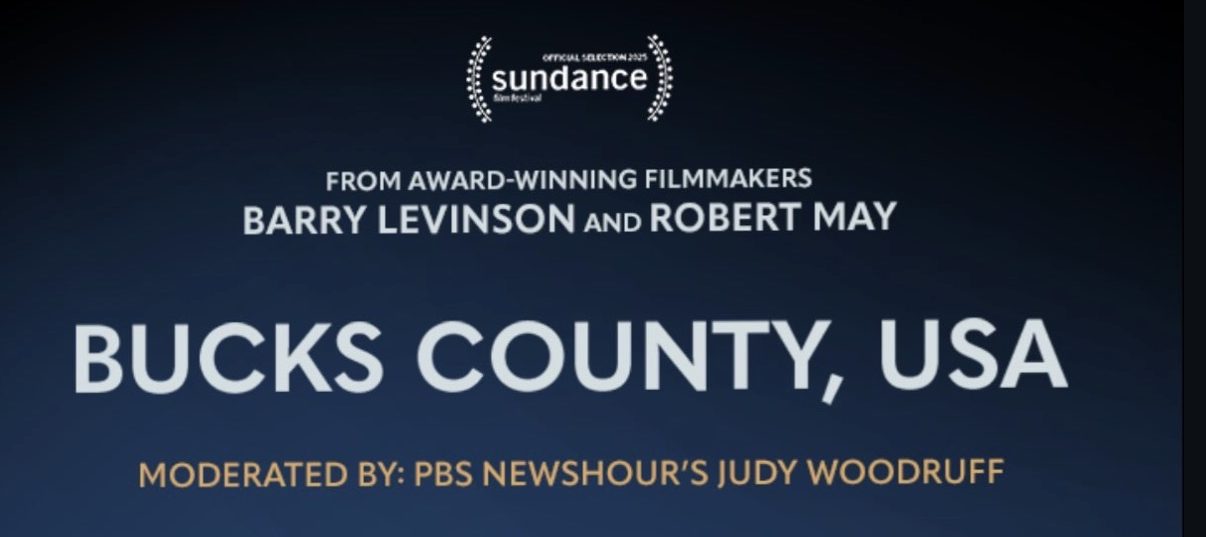
Earlier this year, I posted about an image I created being used in the opening title sequence of a documentary that premiered at the Sundance Film Festival — and not just any documentary, but one directed by Oscar winners Barry Levinson and Robert May. I’m thrilled to share that Bucks County, USA will air nationally on PBS beginning September 20th.
To celebrate, WHYY and Westdoc are hosting an exclusive pre-release screening on Tuesday, September 15 at the Zlock Performing Arts Center, including a Q&A with iconic broadcast journalist Judy Woodruff. It’s free and open to the public.
I’ve been lucky enough to do some good work over the years. But seeing my name in the rolling credits next month? I’m not going to pretend that’s not pretty awesome.
As the curtain falls on 2023, I find myself in the familiar territory of retrospection, sifting through images that have defined my year as a photographer. Narrowing them down to a traditional Top 10 was a struggle. A struggle in which I failed miserably.
This year marked a significant shift in my photographic tools. While my trusty Canon often took a backseat, the iPhone 15 Pro Max emerged as a surprising daily go-to camera. Its 120mm zoom was a revelation and the one thing that held back previous versions from taking a stronger hold in my quiver. It really changed how I shoot and what I see. Is it perfect yet? No, but the iPhone is a game changer.
My portfolio this year reflects a diverse collection of moments and experiences. In the studio, the precise control of off-camera flash melded with the subtleties of natural light to create a number of portraits that rise to the top of my portfolio. The streets, always a canvas for unscripted stories, came alive under my lens, each scene a raw and unfiltered slice of life. Exploring low light and abstract subjects pushed my creative boundaries, while the majestic scenes provided by Mother Nature were a reminder of the ever-present beauty in our world and in my own backyard. The Bucks County Classic, true to tradition, added more favorites to my collection.
A highlight of the year was seeing my photographs play a role in a hard-fought school board campaign that drew national attention. This experience was more than just an ego boost; it was a powerful reminder of the influence and inspirational capacity of photography.
I’m excited for what 2024 holds. I’m ready for new creative challenges and fresh perspectives. Here’s to capturing more compelling stories in the year ahead.
There’s an ongoing debate in photography about whether a photographer takes or makes a photograph. I’d argue celebrity photographer Greg Williams puts it to rest with this quote:
“Sometimes you take a picture, sometimes you create a picture and other times you really make a picture with the subject.”
“You’re submitting that shot of the two nuns, right?”
I was thinking about it, I told my friend, but life was busy and I shoot mostly for fun now. Well, mostly. It’s still an adrenaline shot to the ego seeing one of my images on a display ad around town or accompanying a news story.
So, I submitted what I consider the single luckiest frame I’ve ever captured to the single biggest competition I know: National Geographic’s Pictures of the Year contest.
Two nuns engage in conversation atop Aventine Hill in Rome as the sun sets behind St. Peter’s in Vatican City. The viewpoint draws locals and tourists alike at sunset. Many make the trek to the top of Aventine Hill in Rome, Italy, to queue in line for a glimpse of St. Peter’s Basilica through the famous Aventine Keyhole. Aventine is one of seven hills ancient Rome was built on. A few steps off the beaten path, however, one walks onto the cinder esplanade of Terrazza Belvedere Aventino with its sweeping panoramic view of the city. Shot on iPhone 12 Pro.
While best is subjective, there is little argument for this one being my luckiest. We were on a tuk tuk tour of Rome late in the afternoon getting our bearings to explore the city more throughout the week. We motored up to see the famous Aventine Keyhole. The line of other tourists extended farther than any of us cared to wait. Instead, we walked the adjacent grounds of Terrazza Belvedere Aventino and watched the sun descend behind the Eternal City.
Tourists and locals sat and stood against the stone wall overlooking Rome. I wandered. While wandering makes for a good photographer, it, conversely, makes for a frustrating travel companion. I wander because I want to see what others don’t, to get a different perspective. That’s when I saw the frame: two nuns in blue habits in casual conversation, legs dangling over the edge, Saint Peter’s dome perfectly aligned between them. I held my iPhone close to my chest, framed as best and quickly as I could, and fired off a couple of frames…giggling at my luck.
Stumbled across this article in Digital Camera World highlighting some of the iconic destinations around the world that don’t allow — or heavily frown upon — travelers taking photos. I’m pretty good about doing my research into local customs before we travel and try to play by the rules. But sometimes an image appears in front of you that you just can’t help but capture.
with guards authorized to intervene if anyone is caught trying to take a sneaky shot.
The Crown Jewels in the Tower of London is one such place. Entering a dark room, you see the jewels in a glass case. You pass by them on a moving walkway. There are signs that instruct visitors that no photos are allowed. I took — mistook — this as a standard “no flash photography allowed” suggestion. It was not a suggestion. And it did not limit itself to flash photography. Nope.
I fired off a single hip shot as I passed. The Queen’s guards were waiting for me at the end of the human conveyor belt. A hand was placed upon my shoulder.
“Sir, please show me your camera. Sir, please delete the images.”
I fumbled for the play and then trashcan buttons.
“Thank you, sir. Have a good day.”
(Photo below is not of the Crown Jewels. To see more from London, check out this gallery.)
Where some see the death of the DSLR, I see different tool in my photographic repertoire
I put my beer down and grabbed my iPhone. Approaching the sand dune, I tightened it into the clamp on a miniature carbon tripod. A quick finger touch on the screen launched the default camera app. With a slight bend in my arms, I composed my shot. The result? A handful of really nice golden hour photographs that captured nature’s majesty on the New Jersey shore.
We took advantage of a last minute cancellation to shift our Covid-19 sheltering in place to a beach house on the doorstep of the Atlantic Ocean in Long Beach Island, New Jersey. A private walkway led to the water’s edge a few steps away. Like most beach vacations — heck, like most vacations — I follow a pack light philosophy. One bag, just the essentials. For a week at the beach, it’s even lighter: a pair of shorts, t-shirts, bathing suit, sandals, a hat, and sunglasses. Depending on the timing and my workload (I’ve been a work-from-anywhere nomad for nearly a decade), I typically bring my Canon Mark 5D Mark IV with either a 16–35L or my Nifty Fifty mounted to it. This week I said screw it, and left the big rig at home. I’d make do with my iPhone.
But bringing the iPhone instead of the Canon wasn’t simply because I wanted to pack light. I needed a mental break. And while I — like many photographers — am jonesing to get back out there and shoot, I just didn’t want the baggage of knowing I had an expensive, powerful rig sitting in the house inanimately chomping at the bit to be used. The iPhone is simple. It would be good enough, like the Instamatics of ye olden days. It would allow me to capture family snapshots and force me to work for anything that might be portfolio worthy.
A recent survey by Suite48Analytics of 881 photographers in North America and Europe found that I’m not alone. Lars Rehm at Digital Photography Review looked into the report and saw that 31% of the survey’s respondents said they use a camera phone more than they ever have before. What I find interesting, according to the study, is that this rise is among professional photographers for professional work, not just for taking personal snapshots.
There is no question that the computational power of today’s phones can turn a snapshot into a work of art. Noise and artifacts seem to be getting better with each software update. Lenses seem to be the weak spot for camera phones, though only when zooming (a good reminder to follow the advice my dad always gave me to zoom with my feet). Profoto even recently announced it is making professional lighting equipment for camera phones.
Do these advancements signal a death of the DSLR? I don’t think so. At least not for me. There’s still something in the physical action of looking through a viewfinder, of gripping the camera body, of the deliberateness of holding your finger halfway down on a shutter until the decisive moment when the scene in front of your lens matches the scene you see in your brain. Yes, I’ll shoot more with my iPhone. It’ll make the images I create with my Canon all the more special and meaningful.
I was recently reading an interview with photographer Nathan Landers and it got me thinking: What would my images look like if I stripped them back, if I made them less about trying to achieve visual perfection and more about the story? So I went back into my catalog to give it a shot.
This is a series Jooj and I shot on a steamy summer morning in a creek behind her house. In the original images, the background was lush with green. But there’s something about the simpleness of black and white. There’s something about the return to the basics, to the days spent in a high school yearbook darkroom learning the craft beyond the click of the shutter.
“I love that grainy, out of focus imperfect look.” — Nathan Landers
Author: Mike Maney
Communication Advisor. Photographer. Former Calvin Klein Underwear Model. Hey, 2 out of 3 ain’t bad.
There’s a line in the movie “We Bought a Zoo” where Thomas Hayden Church says to Matt Damon, “I like the animals. But I love the humans.” Me too.
It’s what got me hooked on photography way back in high school. Working on the yearbook staff gave me an excuse for always having my camera with me. It allowed me to capture moments that otherwise may have been forgotten to time. I still have some of the prints I developed in the darkroom in a box in my office. And every so often I pull out one of the yearbooks I worked on to see my early images. It’s a humbling experience to see where I started and where I’m at now.
Those early years of taking natural light senior candid portraits of my classmates has grown into photographing CEOs, emerging models, actors, and actresses. My style has changed, and sweet-ghost-of-Maisel has my skill gotten better. What hasn’t is my desire and ability to see the person on the other side of the glass.
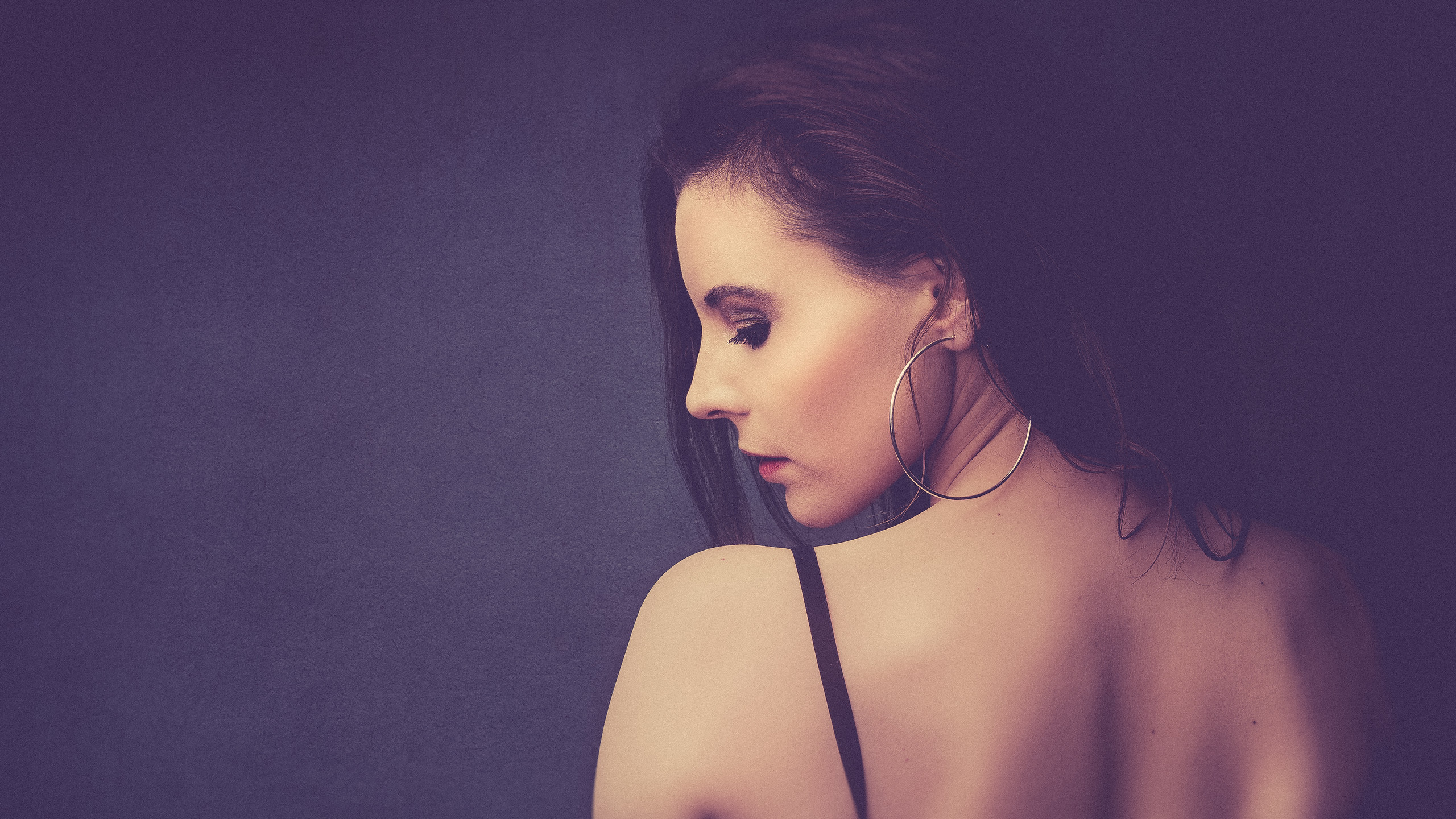
This image is one of several portfolio quality shots I created in collaboration with actress Amanda Livezey during a recent studio session. It was one of those shoots where editing down the great from the really good was incredibly difficult. But that’s part of the process, too. It’s not just setting up lights, dialing in settings, and clicking a button. It’s all the in between — the human part of what photography is about. It’s the back and forth collaboration with your subject, the instinct of knowing when to press the shutter, the need to wrap the shoot with the appropriate level of mood and energy, and then the ability to throw away shots others might think are great because to you they just aren’t great enough.
Through it all runs a constant current: a love of other humans.
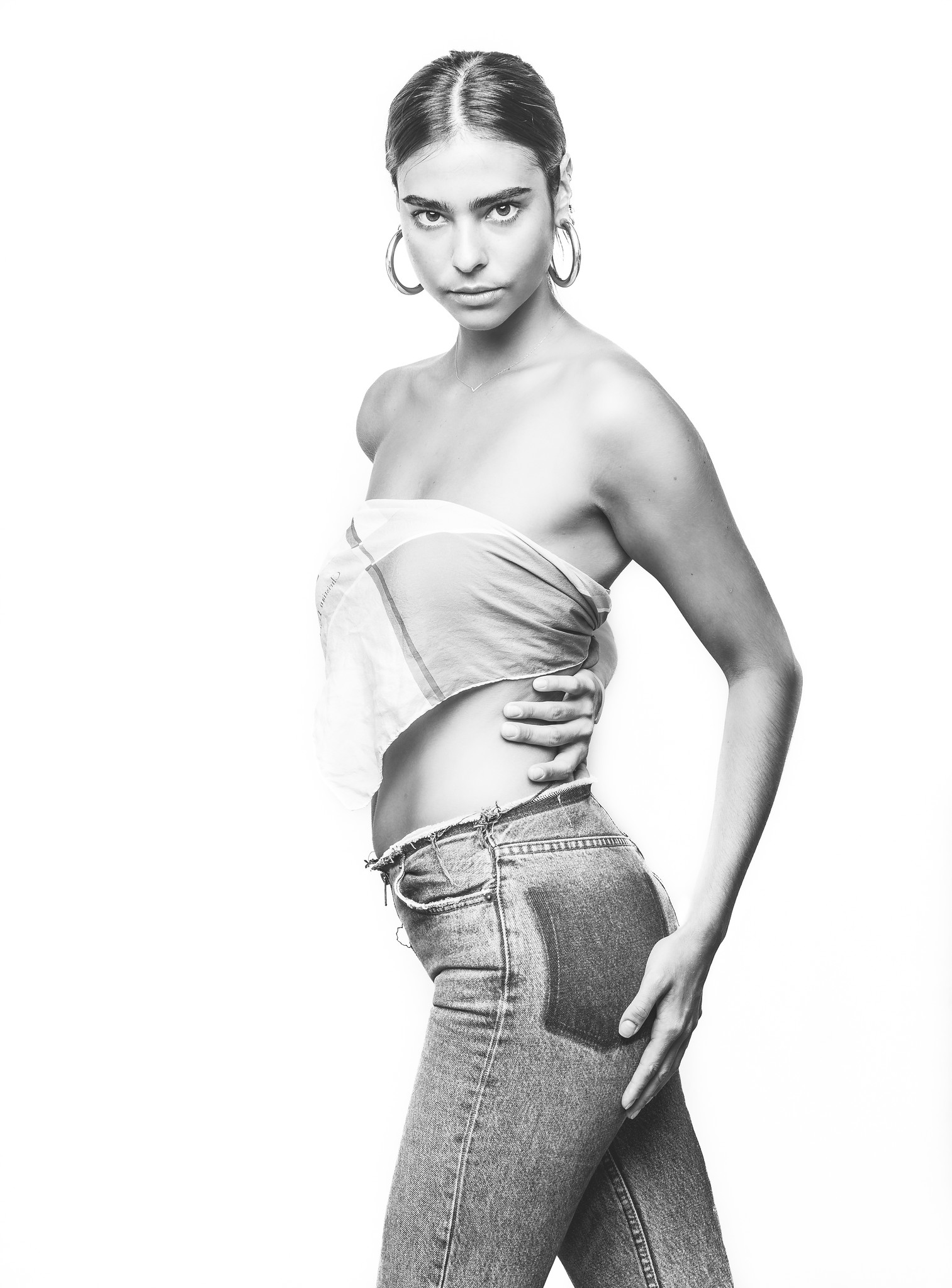
Feels like forever ago that Jooj and I started building out her modeling portfolio. We’ll get back to it post-apocalypse, but thought I’d feature one of my favorite shots from our last studio session.
After our first shoots — firsts for both of us — Jooj signed with Joy Talent Agency. You may have seen her on QVC. And while I’d love to think the photos played a small part, the honest reality is that her success is the result of hard work and the discipline to take this work seriously, to go after it. All while focusing on her first year of college.
I predict we’ll see Jooj in fashion magazines and billboards in the future.