Tag: Politics

  • The Skills We Keep Undervaluing

    The Skills We Keep Undervaluing

    Over the winter break (we still call it that, right?), I got a text from a good friend. It consisted of the following: A link to the transcript of NYC Mayor Zohran Mamdani’s inaugural address and the message “Mamdani’s speech is GOOD!”

    And it was.

    Like me, my friend gets excited about good speechwriting. She’s the kind of person who notices not just what was said, but how it was said, why it worked, and all of the other intricacies that are invisible to the untrained eye.

    “Equally as good as his nomination speech,” I replied.

    At which point she forwarded a profile written by Andrew Lawrence in The Guardian of the speechwriter behind them: Julian Gerson.

    As we were texting back and forth, one line from the article jumped out at me:

    “Push yourself to think of speechwriting as more than just the written word.”

    That sentence gets at something many communicators understand intuitively but don’t always articulate clearly — especially inside organizations that are increasingly oriented around systems, metrics, and optimization.

    At its highest level, speechwriting isn’t just writing. It’s writing with performance in mind. It’s anticipating how words sound when spoken, not just how they read on a page. It’s understanding rhythm, pacing, emphasis, and silence. It’s knowing how ideas land when they leave the page and enter a room full of people with their own histories, assumptions, and distractions.

    That’s where the real work is.

    Julian Gerson’s contribution to Mamdani’s victory address deserves real, serious kudos. Among the elite pantheon of professional speechwriters throughout history, his work is already widely respected, not because it aims for flourish or cleverness, but because it shows discipline. The speech weaves political principle, history, lived experience, and strategic barbs deftly. It was built — not just written, but constructed — to be felt, not merely heard.

    Across politics, business, and institutions more broadly, we’ve spent years treating influence as a technical problem. If we gather enough data, optimize the right channels, and scale distribution, we assume persuasion will follow. Language, in that model, becomes a surface layer, something to refine once the real work is done.

    But the gap between communication and persuasion keeps widening.

    I see organizations that communicate constantly and still struggle to align people around a shared direction. Leaders explain decisions clearly and are surprised when clarity doesn’t translate into commitment. Initiatives launch cleanly, with all the right mechanics in place, and then stall for reasons that no dashboard seems able to diagnose.

    This isn’t an argument against data or technology. We need both. Data helps us understand conditions. Technology helps us move information efficiently. But neither creates meaning. Meaning still has to be constructed by someone who understands how ideas fit together and how language lands when it’s heard by real people. Data creates facts. Meaning creates movements.

    That capacity — synthesis, interpretation, judgment expressed through words — is exactly what we’ve been training out of institutions.

    Writing, rhetoric, and performance have been quietly downgraded to “soft skills” (a term I despise with the heat of a thousand suns), while technical fluency is treated as the primary marker of competence. The result is a mismatch between what organizations optimize for and what they actually need to move people.

    The cost of that mismatch shows up in subtle but expensive ways: misalignment, disengagement, repeated explanations that don’t stick, and initiatives that consume time and resources without generating compounded momentum.

    The reason the Mamdani victory speech resonated with so many professionals is not because it was novel, but because it met a standard of craft that has become surprisingly rare. People who work with language recognized what was happening because they know how difficult it is to do well.

    This isn’t nostalgia for the liberal arts, and it isn’t an argument about prestige or tradition. It’s a practical assessment of capability. Reading, writing, argumentation, and interpretation are not indulgences. They are foundational tools for leadership, persuasion, and trust.

    As automation increases and execution becomes cheaper, judgment becomes more valuable. Judgment is exercised through language — through deciding what matters, how ideas connect, and how to express that connection in a way others recognize as credible and worth acting on.

    Technology and data remain indispensable. They describe conditions and expand reach. They don’t do the work of emotion. That work still falls to people who can think clearly and communicate with intention.

    Feature image: Mike Maney
  • How to Pronounce Kamala

    How to Pronounce Kamala

    Using NameCoach to help people pronounce U.S. Vice Presidential candidate Kamala Harris’s name correctly.

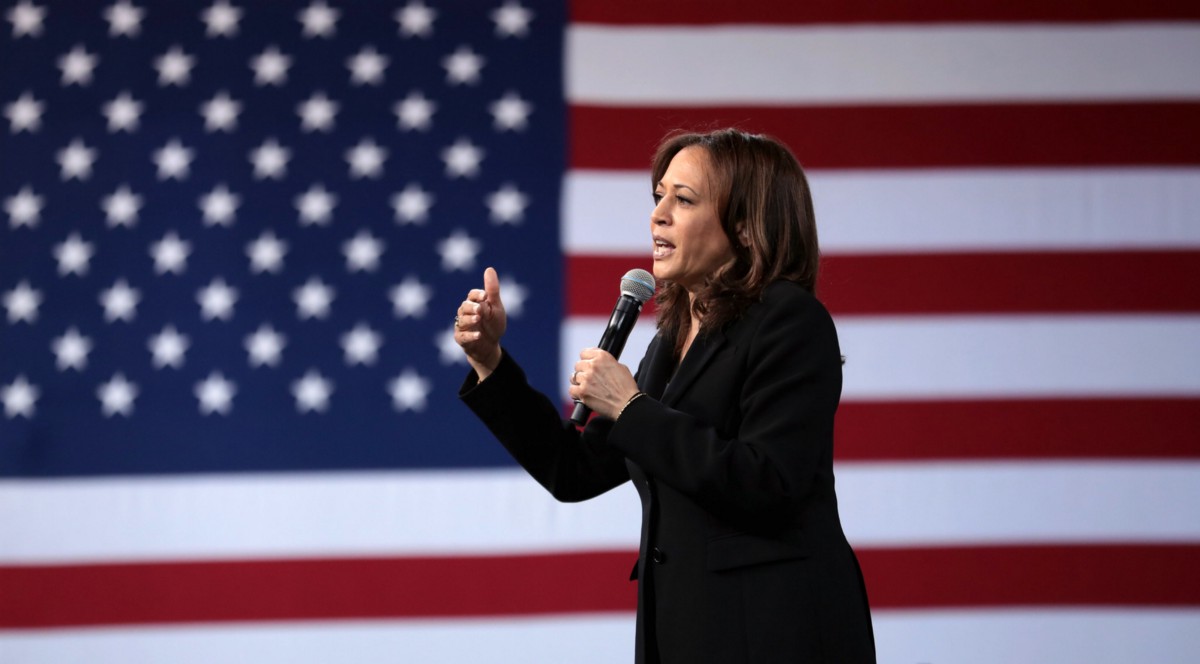
    U.S. Senator Kamala Harris speaking with attendees at the 2019 National Forum on Wages and Working People hosted by the Center for the American Progress Action Fund and the SEIU at the Enclave in Las Vegas, Nevada. (Photo courtesy of Gage Skidmore via Flickr/CC BY-SA 2.0)

    One of the most powerful words in any language is a person’s name. It’s something I learned in college reading Ursula K. Le Guin’s “A Wizard of Earthsea.” And it’s something recent research studies back up, using science to show that our brains involuntarily respond to the sound of our own names.

    Pronouncing someone’s name correctly is important. In an educational setting, for example, saying a student’s name right has a direct, postive impact on that student’s long term success. Correct name pronunciation translates to the business world, too, in areas such as customer support, sales, and recruiting. LinkedIn recently announced a name pronunciation feature for their users.

    Now, imagine you’re in the running to be the next Vice President of the United States and newscasters, pundits, and even your own colleagues butcher the pronunciation of your name in front of millions of people around the world. That’s what happened (and continues to happen) to Democratic Vice Presidential candidate Kamala Harris.

    Kamala’s experience is one Praveen Shanbhag knows all too well. He created a company, NameCoach, out of the pain his family experienced when his sister’s name was mispronounced as she crossed the stage during her graduation ceremony. Praveen wanted to make sure no other family had to go through what his did. In the years since he founded the company, universities around the world have used NameCoach to help teachers and administrators create a stronger sense of inclusion for their student bodies.

    In response to recent and ongoing events in the United States, Praveen used the company’s platform to support the efforts of those fighting against racial injustice. Using a list compiled and maintained by NPR CodeSwitch, he and his team created audio files for the correct name pronunciation of Black Americans killed by police.

    It is intended to support those who are encouraging the public to hear and say these names, to help recognize their humanity and memorialize them. It is also intended to support the correct pronunciation of these names in national discourse. — The NameCoach Team

    Which is why, today, we see Praveen once again turning the platform to address issues on the national stage, using it for civic and democratic good to ensure that the too-often-mispronounced name of a candidate for one of the highest offices in the land is said correctly. You can listen to it below.

    And if you want to embed this into your own site or app or share it with your networks, NameCoach published resources for you on their site.

  • Damn You Nate Silver

    Slides from my closing keynote at The Social Business Future Conference yesterday.

  • PR’s Caffeine Jolt

    Becoming a big fan of Starbucks…not for its coffee, but for its bold approach to PR. Traditional PR strategy would advise the CEO to avoid conflict at all costs; their modern approach is one of take a point of view – if even unpopular – and say what needs to be said and what others are afraid to say. Huge brand cred, IMHO. And lessons to learn for other organizations and PR pros. Having a strong position on an issue and doing the right thing is not the sole domain of national politics.

  • All votes are not equal, really

    US Senator Barack Obama campaigning in New Ham...Image via WikipediaThere are people in this country who should not be given the privilege to vote.

    Today’s Wall Street Journal is carrying a page one story about a trend among working class women to support Barack Obama‘s presidential bid. The impetus behind this shift (this demographic supported McCain until recently) is the belief that Obama will do more to help the middle class through the current economic crisis.

    What’s troubling is what these voters believe they have to sacrifice in their new support. A couple of highlights from the WSJ story:

    • “They may have to get over race.”
    • As U.S. economic concerns intensify, ranks of blue-collar females are reconsidering everything from Sen. Obama’s policies to their comfort level with his race.”

    I’m sorry, but if you are an American who still needs to get comfortable with someone’s race, your prejudice and ignorance precludes you from casting an informed and meaningful vote.

    On second thought, I’m not sorry. I’m appalled.

    Related articles by Zemanta

    Reblog this post [with Zemanta]
  • A Tale of Two Women (The difference between Hilary and Sarah)

    South face of the White House.Image via WikipediaAt one time, there was a powerful woman running for one of the highest offices in the United States. I — like many others — held her up as an example of what was possible to my young daughters.

    Today, there is a different woman running for one of the highest offices in the United States. I — like many others — hold her up as an example of all that is wrong with politics to my young daughters.Related articles by Zemanta

    Reblog this post [with Zemanta]
  • Listening to Our Hopes, Instead of Our Fears

    A great line from Michelle Obama at the Democratic National Convention last night:

    “And one day, they — and your sons and daughters — will tell their own children about what we did together in this election. They’ll tell them how this time, we listened to our hopes, instead of our fears. How this time, we decided to stop doubting and to start dreaming.”

    The difference between the Obama and McCain campaigns (and the Democratic and Republican platforms, for that matter) is not a difference of policy. It is not a difference of who is right or who is wrong on abortion. It is not a difference of who is right and who is wrong on the economy or the war or any of the other hot-button issues that divide the two parties. Michelle Obama hammers home what the real difference is in this election: a difference of hope and dreams versus fear and doubt.

    And that, dear reader, is why my vote — a vote for today and a vote for my daughters’ futures — will be cast for Barack Obama.

  • I’d Give Obama’s Response to the SotU an A-

    The Huffington Post is carrying the text and video of Presidential-hopeful Barack Obama’s response to President Bush’s state of the union address last evening.  It’s well worth reading the text.  One wonders if Obama picked up some of the Kennedy speechwriters in addition to Ted’s endorsement yesterday.  The only thing holding Obama’s response from deserving an A+ was his blatant and unneccessary campaigning.  We get it:  you’re running for President and you have plans that will fix the mess Bush and the current members of Washington have put us in.  Last night wasn’t the time to campaign.  It cheapened what was a powerful and simple response.